
Why Screen-Free Matters in Early Childhood (and What Screens Quietly Replace)
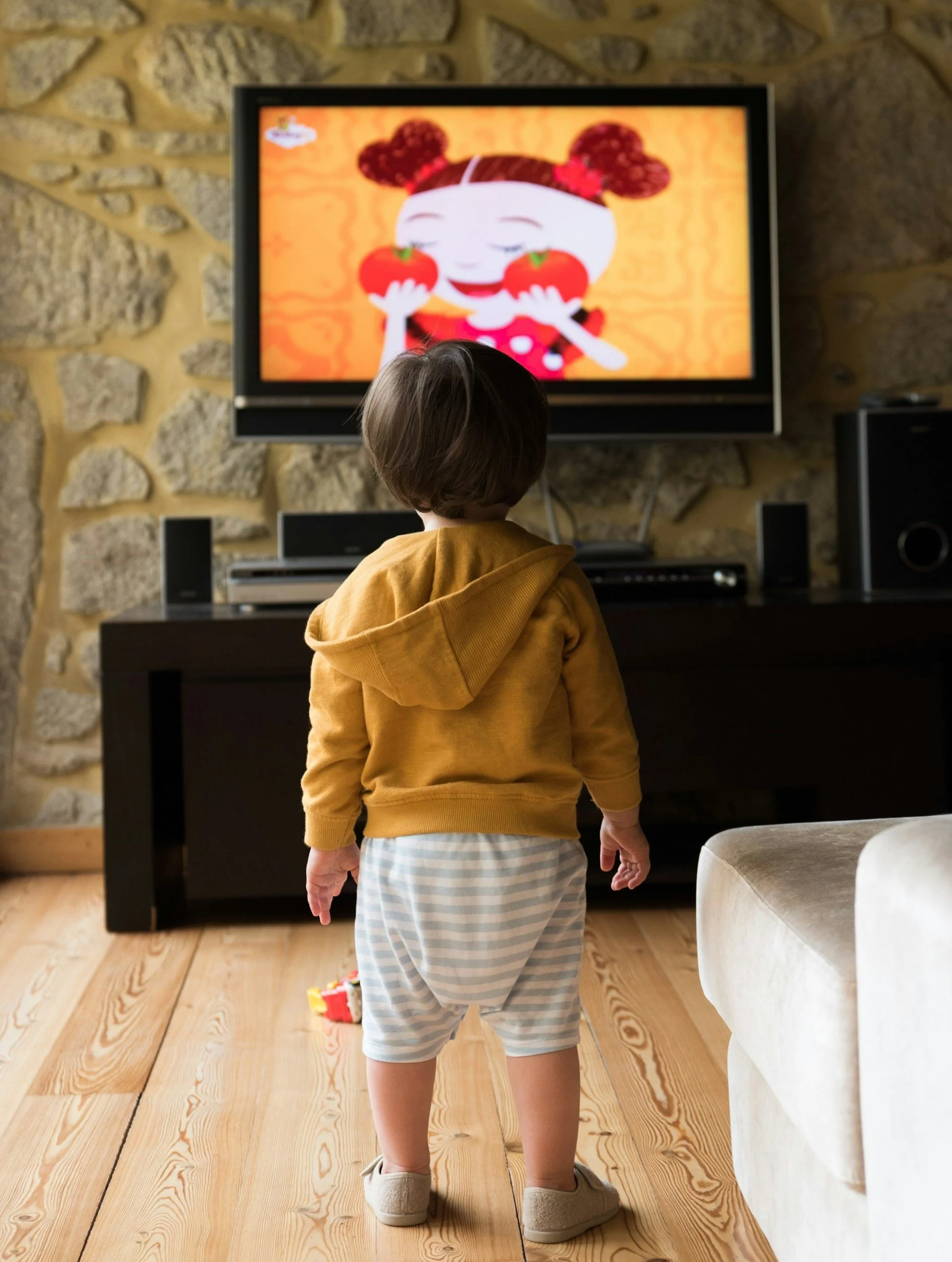
Before we dive into this topic, let's start with a deep breath, because this is a topic that comes loaded with guilt — and guilt is not my goal here. We're all out here just doing our best trying to survive parenthood. What I do want to share is what the research actually says about screens in the early years, because once you understand why screen-free time matters, the small choices get a lot easier — and a lot less stressful.
What the experts recommend
The American Academy of Pediatrics (AAP) offers some simple guideposts for the youngest years:
Quick Science: The AAP Guidelines at a Glance
- Under 18 months: avoid screen media other than video-chatting with loved ones.
- 18–24 months: if you introduce screens, choose high-quality programming and watch together.
- 2–5 years: limit non-educational screen time to about one hour on weekdays.
- At every age, co-viewing — being right there, talking about what you see — matters enormously.
American Academy of Pediatrics
These aren't meant to be a test you pass or fail. They are guidelines.
What the research is finding
A growing body of research links heavy early screen use with differences in how young children develop language and communication. One of the largest recent studies followed about 7,000 children in Japan and found that more screen time at age one was associated with delays in communication and problem-solving skills at ages two and four — with the strongest links among children watching four or more hours a day (Takahashi et al., 2023).
A 2023 systematic review of multiple studies similarly found associations between heavy "smart media" use and speech and language delays in young children. And brain-imaging research has connected higher-than-recommended screen use in preschoolers with differences in the white matter that supports language and early literacy (Hutton et al., 2020).
Here's the caveat, and we think it matters: most of this research shows correlation, not proof of cause. Children who use more screens often differ in other ways too. So we hold these findings thoughtfully — not as alarm bells, but as a consistent, gentle signal pointing in one direction.
The real story: it's about what screens replace
If there's one idea we'd love you to carry away, it's this. The concern in the early years isn't only what a screen does — it's what a screen quietly replaces.
In the first few years, children's brains are built through what researchers call "serve and return": your baby coos, you coo back; they point, you name it; they babble, you light up. These thousands of tiny back-and-forth exchanges are how language, attention, and emotional regulation get wired in. They are, quite literally, the curriculum of early childhood.
A screen can't serve and return. It talks at a child, not with them. So every hour of passive watching is an hour not spent in the conversational, hands-on, face-to-face play that builds those foundational skills. That's the heart of it. Not screens as villains — but real human interaction as the irreplaceable hero.
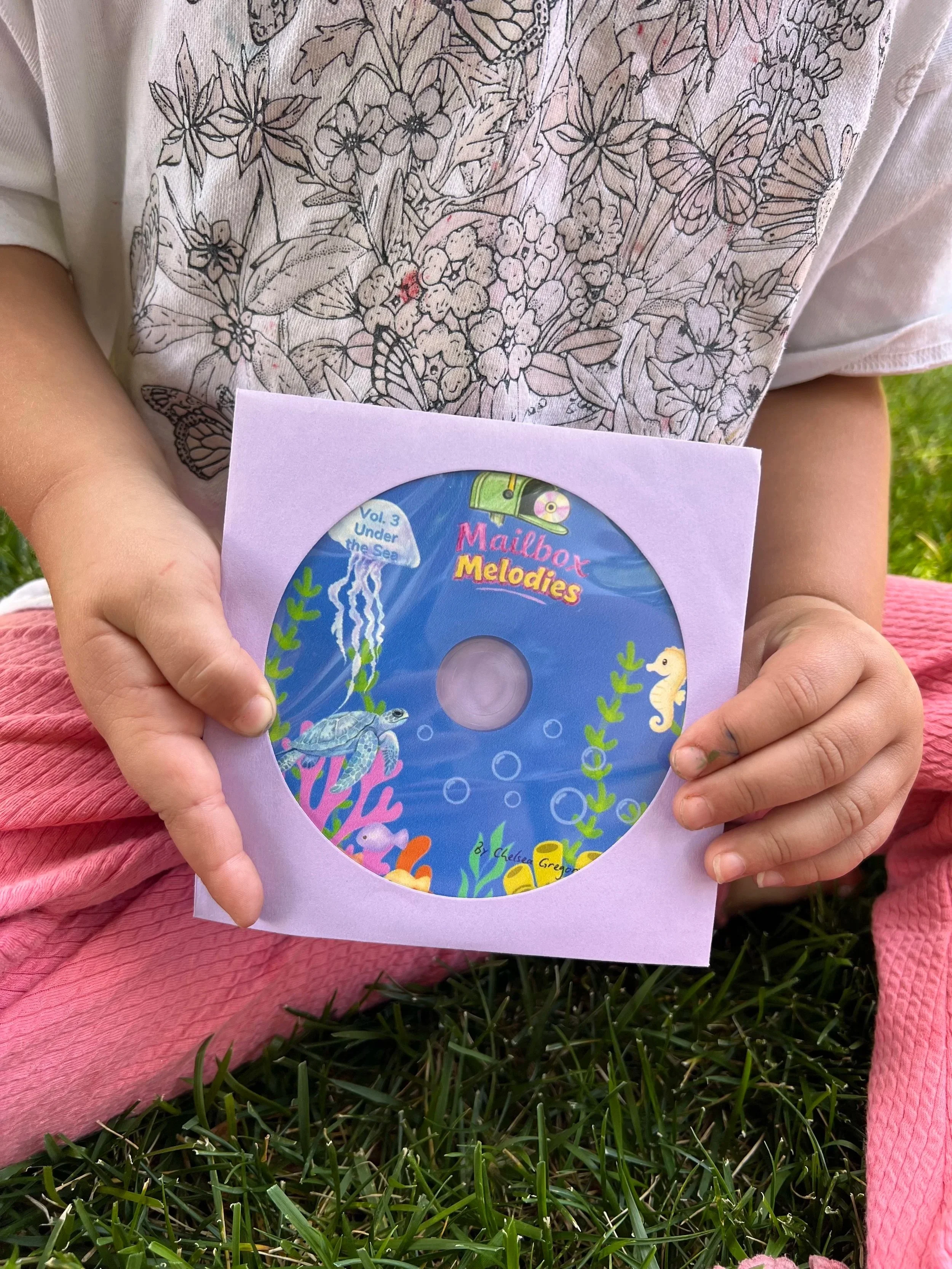
The Mailbox Melodies Method
Mailbox Melodies is an audio-first, screen-free experience by design — a CD and booklet, not an app. Your child listens, moves, breathes, and sings with you in the room. I designed it to invite the serve-and-return connection that screens can't offer: you singing the hand motions together, you "smelling the flowers" side by side. The music is the prompt; you are the magic.
Screen-free doesn't mean stimulation-free
A worry I hear often: "If I cut back on screens, won't my child be bored?" Happily, no — and a little boredom is actually good for them; it's the doorway to imagination (it's also how a plain cardboard box becomes a spaceship). Screen-free simply means trading passive watching for active doing. And the active version is where development lives.
Try This at Home
- Make audio your secret weapon. Music, stories, and lullabies hold a child's attention.
- Swap, don't just subtract. Heading into a long car ride or a witching-hour meltdown? Have a go-to screen-free ritual ready — a song, a movement game, a "what do you hear?" listening hunt.
- Protect the connecting hours. Aim to keep meals, the bedtime wind-down, and the first hour of the day screen-free. These are your richest serve-and-return moments.
- When you do use screens, co-view. Sit close, talk about what's happening, connect it to real life. A watched-together show is a different thing than a handed-over one.
- Let yourself off the hook. A screen on a hard day is not a character flaw. Aim for the overall pattern, not perfection.
The gentle takeaway
Screen-free time in the early years isn't about deprivation, and it certainly isn't about guilt. It's about protecting the irreplaceable: the conversations, the eye contact, the songs sung together that wire a young brain for language and calm.
You don't need to be perfect. You just need to keep showing up as your child's favorite, most responsive, most loving "screen" of all — the human face that looks back, sings back, and breathes alongside them. That's the experience I try to pour into your mailbox every single month.
References
- American Academy of Pediatrics — Media and Young Minds / screen time recommendations.
- Takahashi et al. (2023). Screen Time at Age 1 Year and Developmental Delay. JAMA Pediatrics.
- Relationship Between Speech Delay and Smart Media in Children: A Systematic Review (2023). PMC.
- Hutton et al. (2020). Screen-Based Media Use and Brain White Matter Integrity. JAMA Pediatrics.